This is the single most common specification error we're called in to correct in Culver City, and it's almost never the installer's bad faith — it's that nobody asked what happens in the room. A film chosen purely on heat rejection can quietly make a space unusable for the work being done in it.
Every film changes the light
Window film works by selectively absorbing and reflecting parts of the solar spectrum. That's the mechanism, and it means no film is truly neutral — all of them alter the balance of what comes through, and most have a mild cast that you'd describe as slightly warm, slightly cool, or slightly green depending on the product.
In the overwhelming majority of installations this is completely irrelevant. The human visual system adapts rapidly, and within a day nobody in a normal office could tell you whether the windows are filmed. The cast is real and it doesn't matter.
Where it stops being irrelevant
It matters when someone is making a colour judgement against a reference. In a grading suite, a design studio matching to a physical sample, or a photography space, ambient light is part of the working environment — and a cast in the ambient shifts perception of what's on the monitor or the print.
This is why the serious version of these rooms controls ambient light rigorously, often eliminating daylight entirely. But plenty of real working spaces are somewhere in between: a design studio with a wall of glass where people are making colour decisions all day without a fully controlled environment. Those are the rooms where film choice genuinely matters.
What to ask for
The relevant questions aren't the ones on a standard quote. If you have colour-critical work happening in a daylit space, ask about:
- Transmitted colour neutrality — what the film does to the balance of light coming through, not just how much.
- Whether the product is available in a genuinely neutral formulation, which many premium ceramic lines are.
- Visible light transmission, since reducing daylight too far shifts the balance between daylight and your artificial lighting.
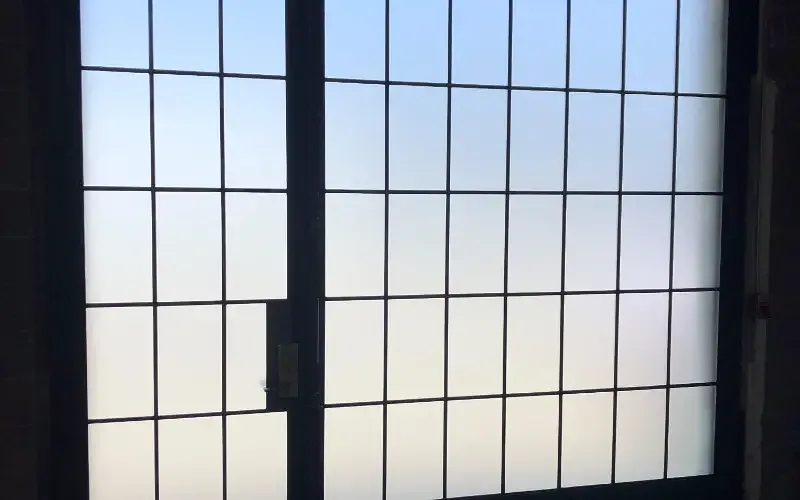
- A physical sample large enough to hold against the actual window and assess in the actual room.
That last one is not optional for this kind of space. A two-inch swatch tells you nothing; you need enough area to judge the light passing through it in situ, at the time of day the room is used.
The screening room is a different problem
Worth separating, because these two get conflated. A screening or review room doesn't need neutral film — it needs actual darkness on demand, and no window film provides that. Even the darkest architectural films pass meaningful light, and a room that needs to go properly black needs blackout treatment.
Where film contributes in those spaces is heat and adjacent-room comfort rather than light control. If someone is selling you window film as a screening room solution, they've misunderstood the requirement — and we'd rather tell you that than take the work.
Get the room use into the survey
The practical fix is simply that the question gets asked. When we survey a creative office we go room by room and ask what happens in each one, because the answer changes the specification more than the elevation does.
It also frequently reduces the scope. Plenty of spaces don't need a premium neutral product at all, and paying for one across a whole floor when three rooms need it is a straightforward waste. If you'd like commercial film specified against what your rooms actually do, get in touch and we'll survey it properly.